Hanok Village
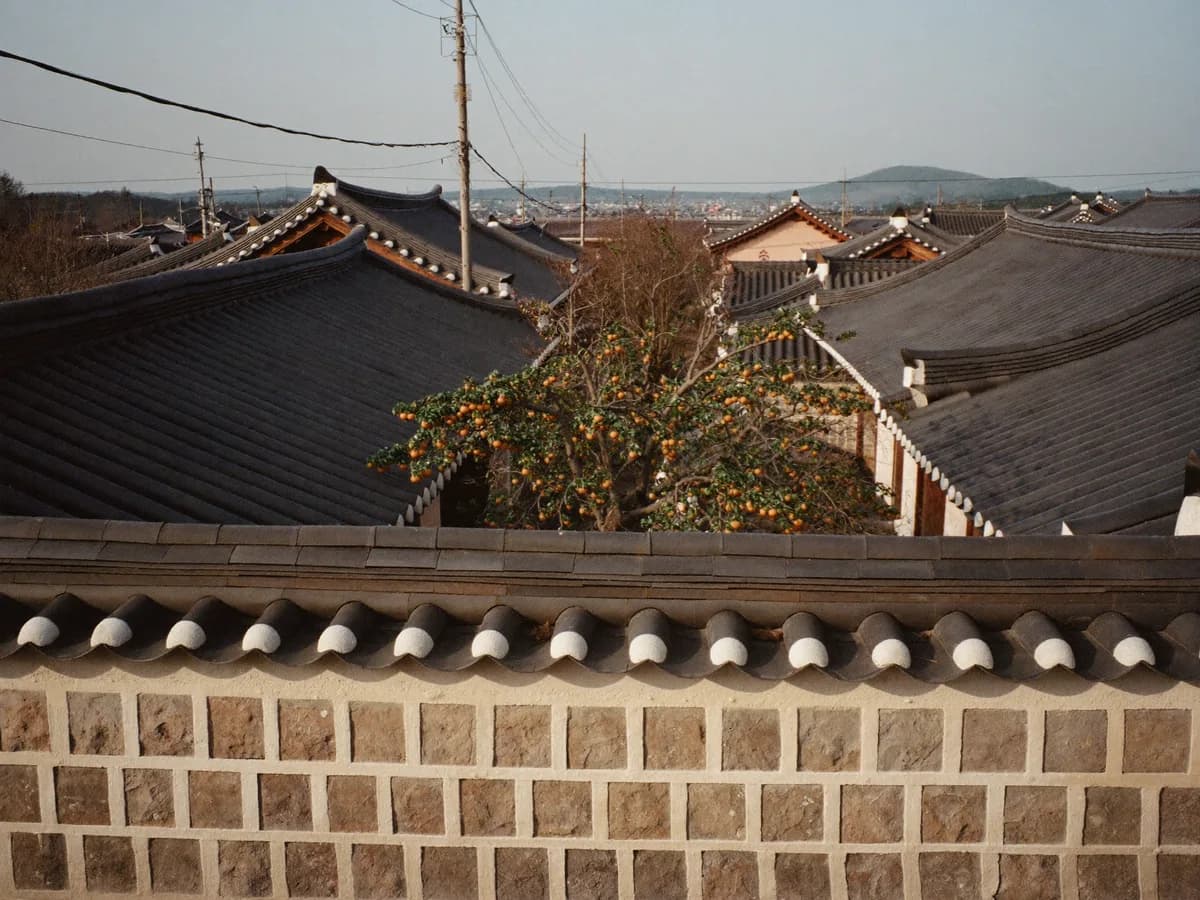
Some 700 hanok lanes woven with heritage sites like Gyeonggijeon shrine and cafés in between. If you plan to work from a hanok stay, confirm the desk and Wi-Fi with the property before booking.
WAKATION · GUIDE
A slow workation under hanok eaves — a UNESCO city of gastronomy
Korea's largest urban cluster of some 700 hanok houses — mornings at a hanok-stay desk or café, afternoons wandering the lanes. Designated a UNESCO Creative City of Gastronomy in 2012, so dinner is the day's reward. About 1h 40m from Seoul (Yongsan) by KTX — built for a slow 2–4 day workation.
| Time difference | KST (UTC+9) |
|---|---|
| By train | KTX about 1h 40m (Yongsan or Seoul Station → Jeonju) |
| Currency | KRW |
| Best season | Apr–Jun · Sep–Nov |
| Local subsidy | Jeonbuk Workation → |
Some 700 hanok lanes woven with heritage sites like Gyeonggijeon shrine and cafés in between. If you plan to work from a hanok stay, confirm the desk and Wi-Fi with the property before booking.
Old-downtown alleys turned café, bakery and bar streets. Whether you can work on a laptop, and seating or power outlets, vary by café — check on site.
Some external links may earn a commission. Booking, payment, cancellation and refunds follow the external provider’s terms.
Travel time: KTX about 1h 40m (Yongsan or Seoul Station → Jeonju).
Best season: Apr–Jun · Sep–Nov.
This guide covers Hanok Village, Gaengnidan-gil. Some 700 hanok lanes woven with heritage sites like Gyeonggijeon shrine and cafés in between. If you plan to work from a hanok stay, confirm the desk and Wi-Fi with the property before booking.
Jeonbuk Workation: A regional workation program for workers in Korea. The official notice does not say whether non-Korean nationals can apply, so confirm eligibility with the operator before planning around it.
See conditions →